
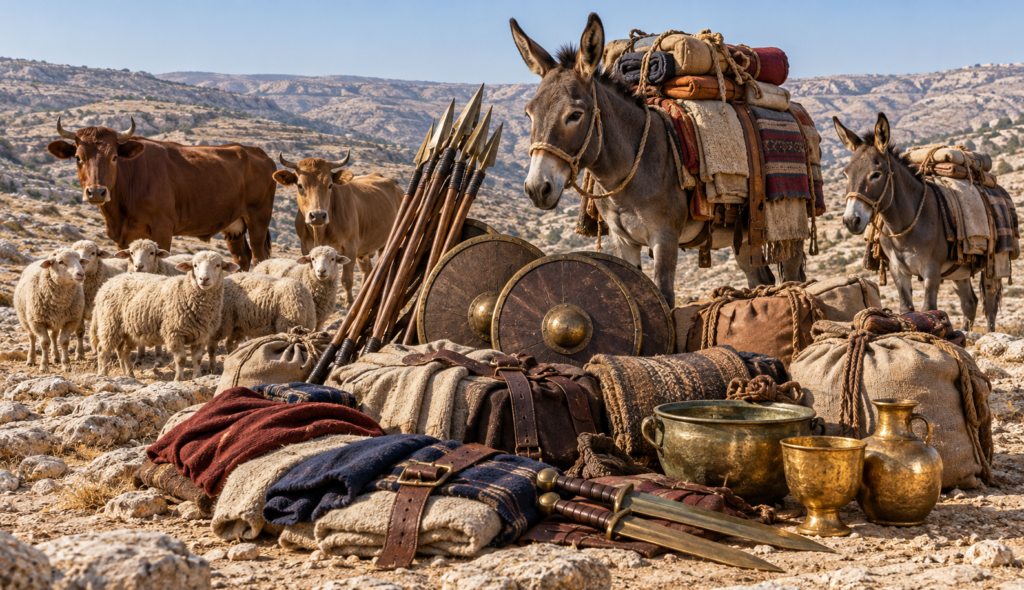
Avraham had just returned from an extraordinary victory. Four kings had attacked Sodom, seized its possessions, and carried away its people, including Avraham’s nephew Lot. Avraham pursued the invaders, rescued the captives, and brought back their property.
The king of Sodom offered him the recovered possessions, asking only that the people be returned.
Avraham refused to accept even a thread or a shoelace. He would not allow the king to claim that he had made Avraham wealthy. Yet he insisted that Aner, Eshkol, and Mamre receive their shares.
Why would Avraham turn down a fortune for himself while protecting what others received?
What Is Holy Wealth According to Rebbe Nachman of Breslov?
Avraham was no stranger to prosperity. Earlier in Lech Lecha, the Torah describes his livestock, silver, and gold. He had acquired possessions during his time in Egypt. His refusal after the battle was not a rejection of wealth itself.
He explained his decision by identifying the Creator as the Possessor of heaven and earth. The king of Sodom would not be allowed to claim responsibility for Avraham’s prosperity. Rashi connects Avraham’s words with the blessing the Creator had promised him.
That makes the contrast with Egypt important. Money was not the problem in every circumstance. Here, accepting the king’s offer would have permitted a particular claim about where Avraham’s wealth came from. Avraham refused that claim along with the possessions.
Rebbe Nachman of Breslov teaches about ashirut d’kedusha, or holy wealth, and warns against taavat mamon, the craving for money. A person can own substantial resources without making money the center of life. Someone else can spend years acquiring more and still feel that nothing is enough.
The teachings about holy wealth draw our attention to faith, honest dealings, and freedom from that craving. Wealth can provide for a household, meet obligations, and support worthy purposes. Yet the pursuit of it can also crowd out the very responsibilities it should help a person fulfill.
Rebbe Nachman was not presenting a commentary on Avraham’s exchange with the king of Sodom. His teachings illuminate a related distinction: the amount of money a person possesses tells us little by itself about the spiritual character of that wealth.
Why Did Avraham Insist That His Companions Receive Their Share?
Avraham’s refusal had an important limit. He named Aner, Eshkol, and Mamre and insisted that they receive their portions.
Rashi explains that they had stayed behind to guard the equipment. They had not joined the fighting, but their contribution still entitled them to a share. Avraham did not decide that his personal refusal should deprive them of what was due.
This brings us to the meaning of tzedaka. The word comes from tzedek, meaning justice or righteousness. Giving to someone in need is certainly an act of kindness. But the Torah’s understanding of giving also asks us to recognize a responsibility that exists independently of our feelings of generosity.
A Torah teaching explains that the Creator entrusts the portion intended for the poor to those who possess wealth. The holder of that wealth is responsible for passing on what is intended to help others. This is a spiritual understanding of the obligation, not a claim that every poor person already owns a specific balance in someone else’s account.
Consider a bank teller handing a customer a large sum of cash. The teller doesn’t congratulate himself for being remarkably generous. He knows that he is handing over money due to the customer.
That image gives the wealthy person reason for humility. Tzedaka is a mitzvah, but the giver should not regard the person receiving help as someone who depends entirely on a personal favor. The Creator has placed responsibilities alongside the resources.
Avraham’s companions had shares arising from the battle, not charitable claims. Their legal entitlement is different from the laws of tzedaka. The connection is the underlying recognition that controlling money does not grant a person the right to ignore what is due to others.
The responsibility to provide for others has another side as well. As our article about Noach and Yosef explores, sustaining those who depend on us can require extraordinary effort. Avraham’s example adds the responsibility to respect another person’s share, even when choosing to take nothing for oneself.
How Do Tzedaka and Maaser Bring Holiness to Wealth?
Before his exchange with the king of Sodom, Avraham gave a tenth to Malki-Tzedek, the priest of the Most High. This was not the same legal practice as maaser kesafim, setting aside a tenth of income for charitable purposes. It nevertheless places another financial decision beside his refusal and his protection of his companions’ shares.
Setting aside maaser gives charitable giving a regular place in financial life. It need not depend on whether a person happens to feel generous on a particular day. Money is allocated intentionally, while the applicable rules about obligations, recipients, and family responsibilities still matter.
That practice also challenges pride. When a person regards giving as the fulfillment of a trust, there is less room to imagine that every donation proves personal superiority. The recipient’s need remains real whether or not the giver enjoys the experience of giving.
Rebbe Nachman adds something remarkable. He teaches that giving tzedaka brings spiritual rectification to a person’s money. Its effect is not limited to the amount given; it reaches the wealth that remains in the giver’s possession.
Financially, giving means having less money than before. Spiritually, Rebbe Nachman’s teaching describes something different: through the act of tzedaka, the money that remains can be refined. The teaching is about spiritual rectification, not a guarantee of profit or increased wealth.
By giving a portion of what we possess, we elevate the wealth we keep.